At Maa Tarini DegreeMahavidyalaya, our curriculum is designed to provide students with a balanced blend of academic knowledge, practical skills, and value-based learning. We follow a structured syllabus as prescribed by Utkal University, ensuring that students are well-prepared for higher studies, competitive examinations, and professional careers.
Our academic programs are organized in accordance with the guidelines and regulations laid down by Utkal University, covering both Honours and General courses at the undergraduate level. The syllabus is periodically reviewed and updated by the University to keep pace with changing academic standards and emerging fields of study, ensuring our students receive contemporary and relevant education.
Learning at our college goes beyond textbooks. Our faculty members employ a mix of traditional classroom teaching, interactive discussions, seminars, and practical sessions to help students grasp concepts thoroughly. Regular class tests, assignments, and tutorials are conducted to reinforce learning and track student progress throughout the academic year.
Our academic framework is designed with an eye toward the future — whether a student wishes to pursue postgraduate studies, appear for competitive examinations, or step into a professional career. Regular guidance, doubt-clearing sessions, and academic support are provided to help every student reach their full potential.
The curriculum includes:
Core Subjects – Fundamental to each stream of study (Arts, Science, Commerce).
Elective Courses – Offering flexibility and specialization options.
Skill Enhancement Courses – Computer literacy, communication skills, and soft skills training.
Value Education – Promoting ethics, discipline, and social responsibility.
Our programs are tailored to:
Promote deep subject understanding through interactive lectures and hands-on activities.
Encourage critical thinking and problem-solving skills.
Incorporate co-curricular activities to develop creativity, leadership, and teamwork.
Seat Strength
Total Strength of Arts
0
Total Strength of Science
0
Total Strength of Commerce
0
* Head of the Department
Dr. Chandrakanta Mohanty *
* Total Strength
32 *
The Department of Odia is dedicated to preserving, promoting, and enriching the rich linguistic, literary, and cultural heritage of Odisha. It offers a comprehensive study of Odia language, literature, folklore, and cultural traditions, fostering critical appreciation, creativity, and effective communication skills among students. With a commitment to academic excellence and cultural awareness, the department inspires students to value their mother tongue while preparing them for higher studies, research, teaching, and diverse career opportunities.
* Head of the Department
Dr. Pratap Chandra Tripathy *
* Total Strength
32 *
The Department of Sanskrit offers a deep and enriching study of one of the world’s most ancient and respected languages. Sanskrit is not only the foundation of Indian literature, philosophy, and culture but also a key to understanding our spiritual and intellectual heritage. Through its curriculum, the department aims to nurture critical thinking, research skills, and cultural awareness, while also highlighting the relevance of Sanskrit in modern times. With a balanced approach to tradition and contemporary perspectives, the Sanskrit Department prepares students for academic excellence, higher studies, teaching, and research, while instilling pride in India’s rich cultural legacy.
* Head of the Department
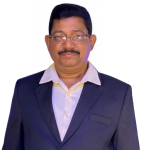
Mr. Madan Mohan Patra *
* Total Strength
32 *
The Department of English is dedicated to fostering a deep appreciation of language, literature, and communication. Our curriculum blends classic and contemporary works, encouraging students to develop critical thinking, creative expression, and linguistic proficiency. Through interactive learning, literary analysis, and skill-based activities, we aim to inspire a lifelong love for reading, writing, and effective communication.
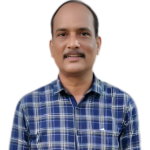
* Head of the Department
Mrs. Sushree Sangita Nanda *
* Total Strength
64 *
The Department of Commerce offers a comprehensive and dynamic study of business, finance, accounting, and economics, equipping students with the knowledge and skills required in today’s competitive global economy. The department fosters analytical thinking, ethical business practices, and entrepreneurial spirit while providing a strong foundation in commerce and management. Through a balanced blend of theoretical learning and practical exposure, students develop the ability to address real-world business challenges with confidence and professionalism. With a focus on academic excellence and career readiness, the Department of Commerce prepares students for higher studies, professional courses, entrepreneurship, and diverse career opportunities in the corporate, banking, finance, and public sectors.
The Department of Chemistry offers a strong foundation in the study of matter, its composition, properties, and transformations, enabling students to understand the scientific principles that shape the natural world. The department promotes analytical thinking, experimental skills, and scientific inquiry through a balanced blend of theoretical knowledge and practical laboratory experience. With a focus on academic excellence, research, and innovation, the Department of Chemistry prepares students for higher studies and diverse career opportunities in education, research, healthcare, pharmaceuticals, environmental science, and chemical industries.
* Head of the Department
Mrs. Sasmita Dash *
* Total Strength
64 *
The Department of Zoology offers a comprehensive study of animal life, biodiversity, ecology, genetics, and physiology, providing students with a strong foundation in biological sciences. The department promotes scientific inquiry, critical thinking, and environmental awareness through a balanced blend of classroom learning, laboratory work, and field studies. With a focus on academic excellence and practical skills, it prepares students for higher studies, research, competitive examinations, and careers in education, healthcare, biotechnology, wildlife conservation, and government sectors.
* Head of the Department
Mr. Shubhakanta Patra *
* Total Strength
16*
The Department of History offers a comprehensive study of human civilization, historical events, cultures, and societies, providing students with a strong foundation in historical knowledge and critical thinking. The department promotes research, analytical skills, and an appreciation of cultural heritage through classroom learning, projects, and field visits. It prepares students for higher studies, competitive examinations, and careers in education, archaeology, civil services, museums, tourism, and related fields.